
October 13, 2022

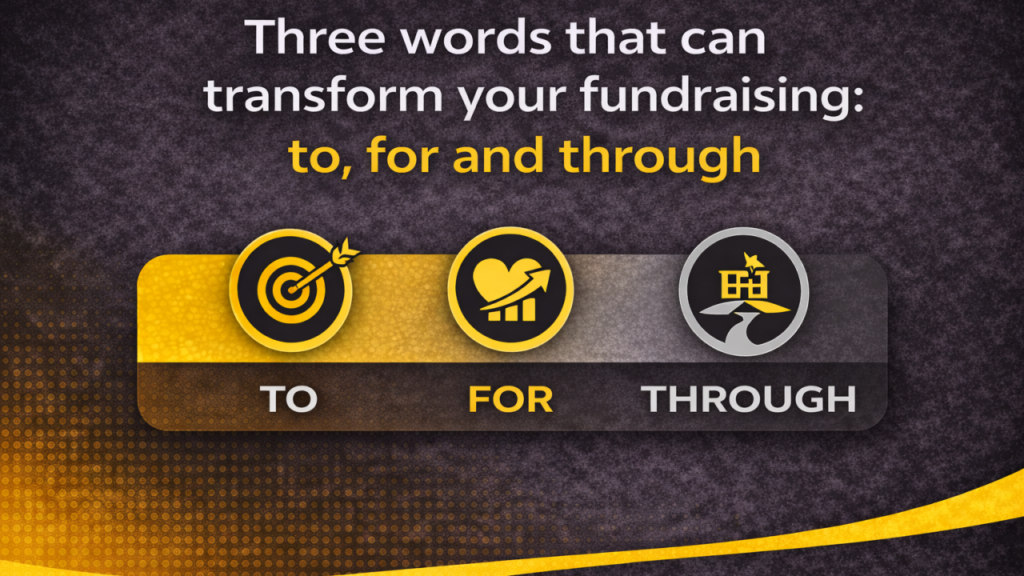
Sometimes it’s the smallest of words that make a difference. There are three little prepositions: to, for and through, that greatly impact our messaging to donors. Each of these one syllable words drives a different giving story.
Donors give to your organization. They give for impact. And they also give through you to help a cause, and that’s not always directly with your organization. If you recognize these three key stories, and make sure each is represented in your fundraising messaging, you have the greatest chance of syncing with the way a donor thinks about giving.
Here’s my take on these three words, and how they can transform your fundraising messages.
Donors give “to” a organization, cause or brand when they feel connected
Your brand is powerful. When your donors feel part of your mission, and they associate your name and brand to their personal history and goals, you’re definitely going to get more gifts. But remember, building a name for your organization isn’t a blank check.
Giving “to” is probably the most overused giving story these days. The assumption that people will give because you’re the “top” organization, or even their only “alma mater,” isn’t great. It’s also pretty useless for those who have never given before. And to put it bluntly, someone (like a student) who has had a bad experience, or felt marginalized, isn’t going to give to just your logo. That’s why you should also focus on the other two prepositions.

Donors give “for” impact, and you’d better be sharing it as a fundraiser
It’s about impact. And in a time where public trust is eroding in institutions, we need to focus on what giving is “for.” That’s my response to fundraisers who complain about losing gifts to GoFundMe campaigns. Giving to a specific need is powerful, especially when we can see the pictures and hear a story of the recipient. And fundraisers are not using impact stories enough.
For example, we found that only 6% of young alumni non-donors want to give to their alma mater’s annual fund, but 54% of them want to give to scholarship support. Scholarships are the number one thing an annual fund usually supports. So, institutions who want to capture more young donors should lean into “for,” showing the impact of annual giving to these specific areas, even when the gift is to a broader, branded fund. Tell the stories of direct recipients for the fund’s contributions.
You’re not on a charity island, and what donors do “through” giving to you to help other causes matters
You do many things “through” your organization that impact the broader charitable world. A classic example in higher education is where our students do service. An Education department likely sees hundreds of students each year working in local schools. On the hospital side, your doctors are engaged in substantial community service and education on health issues. The strength of your institution makes these possible, and talking about what donors are facilitating “through” you in the the broader world is powerful.
As I’ve helped organizations craft messaging to donors, I’ve noticed that many organizations over-focus on one of these giving prepositions. We too often assume that loyalty or logo will be the primary driver for giving. Every donor is different, and varying your messaging across these three stories can really make a difference. Lean into brand, but also focus on real impact, and your efforts as part of a broader community for good.
Ready to explore what the Donation Equation can do for your team? Get in touch — or explore the Donation Equation framework.
This blog was also featured on LinkedIn — please share it with your network.